
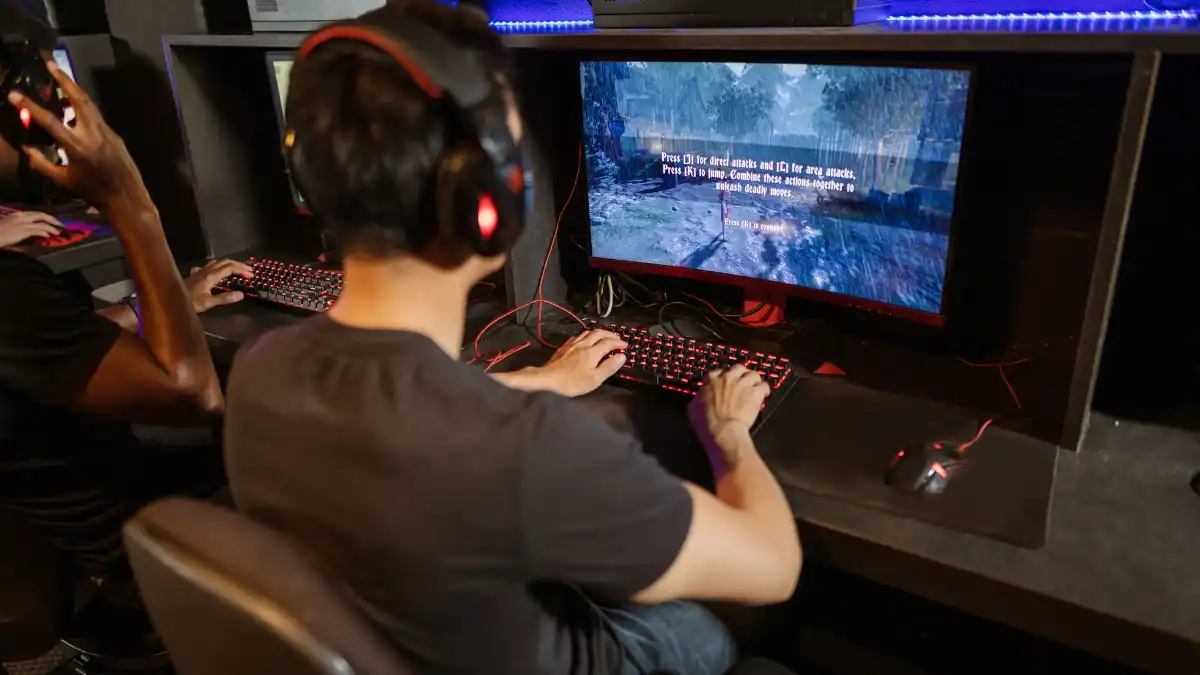
If you play Free Fire, PUBG, or a similar game and want to build a career in esports like Jonathan Gaming, many players have the same question: how can they build a career in esports, and where should they start? The esports market in India is growing very fast, and its value is expected to reach around one billion dollars in the coming years.
To build a career in esports, there are many things that need attention. If the career is started in the right way and the player works in the right direction to become a professional esports player, it can be very useful. In this blog post, I will explain everything that can help an esports player become a professional player.
How Do You Become a Professional Esports Player?
To become a professional eSports player, focus, consistent practice, and strategic networking can help you achieve your goal in 2025. Below are some essential steps to start your eSports career in 2025.
Step 1: Which Game Should You Choose for Esports?
Choose a game that matches your playstyle, has an active competitive scene, and a prize pool ecosystem then commit fully to mastering it. Investigate the competitive landscape of each game; analyze prize pools, team structures, and community activity.
Each game requires different skills such as aiming, reflexes, teamwork, quick decision-making, and situation-based strategy. Focus on the game where you can perform at your best. Use tools like Tracker.gg to analyze your performance metrics such as win rates and kill/death ratios to identify areas for improvement.
Step 2: What Skills Do You Need to Become an Esports Player?
Esports players need sharp aiming, game-sense, fast decision-making, team communication, and 4–6 hours of daily focused practice to compete professionally. Adapting to each match, understanding and anticipating the opponent’s moves is the key to success. Regular practice and drills using tools like Aim Trainer or KovaaK’s are essential to improve reflexes.
Since most esports titles are team-based, team synergy is vital. This requires clear in-game communication and proper coordination. 4 to 6 hours of focused practice per day is necessary, especially focusing on your weaknesses. For example, reviewing VODs (video-on-demand replays) is an important part of analyzing your mistakes and improving strategies.
Step 3: How Do You Break Into the Esports Community?
Networking is a very important aspect of becoming a professional esports player. Start by joining the community on platforms like Discord, Reddit (such as r/esports or a game-specific subreddit), and Twitch.
How To Join Esports Team 4 Important Rules
Participate in discussions, share your tips, and interact with other players. Attending local gaming events or LAN tournaments is also beneficial to build strong relationships with peers and potential teammates.
Step 4: Where Can Beginners Compete in Esports Tournaments?
Beginners can enter esports tournaments on ESL Play, FACEIT, and Battlefy free platforms that offer ranked competition for all skill levels. The first thing to do is join amateur tournaments on platforms such as ESL Play, FACEIT, and game leagues.
New players can gain experience and recognition through these events.
ALSO READ- How to Add Xbox Cloud Gaming to Your iOS Home Screen
Step 5: How Do Esports Players Build a Personal Brand?
Start streaming your gameplay on Twitch or YouTube. This allows you to showcase your skills and personality. Create your highlight reels, which include clutch moments or high-skill plays, and share these on social media platforms like Twitter and Instagram.
Use consistent branding so people can easily recognize you. Stay engaged with your audience, respond to their comments and hold Q&A sessions.
As your followers grow, you will have more opportunities to attract sponsors and join a professional esports team.
Step 6: How Do You Find a Real Esports Team and Avoid Fake Tournaments?
Find teams through official game Discord servers, college tournaments such as Battlefy and the KRAFTON Campus Tour, and LFT posts that include your rank, role, and VOD link. Avoid any tournament that asks for a registration fee without a verifiable event history, official social media presence, or clear prize distribution.
The Indian esports scene has both real opportunities and real scams. According to hgworld, Genuine teams often scout players through official Discord servers and platforms like Battlefy. Fake tournaments with flashy posters and no track record also keep appearing on Instagram.
Here is how to spot a fake tournament: they ask for a registration fee but have no website. They promise prizes that seem too good to be true. Their social media accounts are less than a month old, and they do not reveal the real names of the organizers. Stay away from such events.
For free tournaments, start with the KRAFTON India Campus Tour, college fests, and community cups on Battlefy. For paid tournaments, only pay when the organizer has a good track record. Check who organized their previous event and whether the winners actually received their prizes.
When applying for a team, write a short LFT post. Include your in-game name, highest rank, role, region, and a link to your best VOD. Coaches do not read long essays. They need the facts. For more information, see our complete guide on how to join an esports team.
Which Role Should You Play: IGL, Rusher, Sniper, or Assaulter
You cannot be good at everything. Pro teams want specialists. If you are aggressive and like to move forward first, you are a “rusher” or “assaulter.” If you stay calm under pressure and like to give instructions to the team, you are an IGL (in-game leader). If you have steady hands and patience, you are a “sniper.”
Try every role in scrims (practice matches) for a week. Do not decide based only on “pub matches” (regular matches). Scrims show how you perform against organized teams. Track your stats. Where do you get the most kills? Where do you get the most clutches (winning in difficult situations)? Where do your teammates say you helped them win?
Being good at everything is less important than sticking to your role. A lower-ranked player who is highly skilled in one role and communicates clearly will be preferred over a higher-ranked player who keeps changing roles. Teams need reliable players.
Once you choose a role, stick with it for at least three months. Learn the best sensitivity settings for your game and practice your specific role every day.
How Much Money Can You Really Make as an Esports Player in India?
Top Indian esports players working with organizations like S8UL earn between ₹2 lakh and ₹5 lakh per month. According to Glassdoor, the average salary of an esports player in India is around ₹31,244 per year. Most new players earn from prize money in small tournaments and streaming before getting a fixed salary.
The difference between ₹31,000 and ₹5 lakh can look huge. But it is the same in every sport. A district-level cricketer does not earn as much as Virat Kohli earns on his first day. The same applies to esports.
There are four main ways to earn money. The first is tournament prize money. Tournaments like BGIS and Free Fire India now offer prize pools worth crores of rupees.
The second source is the salary paid by an organization. When you join a team like GodLike, Revenant, or Global Esports, you get a fixed monthly salary. The third source is streaming income from YouTube or Twitch. The fourth source is sponsorships and brand deals.
Do not expect a salary at the beginner level. First, focus on winning small local tournaments. Even a ₹5,000 prize from a college event can show that there is a lot of scope to grow in this career. Start from there. Reading about the highest-earning esports players in India can also give an idea of how far earnings and careers can go at the top level.
What Do Pro Esports Players Say About Going Professional?
S8UL co-founder Animesh Agarwal advises aspiring pros to finish their education first and keep a career backup esports entry is highly competitive. Entry into esports is at the top, as finding a competitive team is a big challenge in the first place.
Despite the increase in esports studios in India, the availability of skilled professionals remains limited. Success in this field is achievable with a strong team and a well-conceived idea.
How to Convince Your Parents to Let You Pursue Esports
This is the question we get asked the most. Your parents know about cricket, but they do not know about BGMI. That difference is your biggest challenge.
First, show them the data. The government officially gave esports the status of a national sport in October 2025. India’s esports market is growing at 18% every year and is expected to reach $1 billion by 2034. There are now official gaming clubs in colleges as well. KRAFTON India’s campus tour has reached more than 130 colleges, including IITs.
Next, explain the system or process to them. Parents often fear things they do not understand because they may seem unplanned or uncertain. Make a daily schedule that includes 4 hours of practice, 2 hours of study, and fixed meal times. Prove to them that you can balance both things.
Do not start with promises; start with results. First, win a local tournament. Even a small trophy from a college event can change the way the conversation goes, from “This is a waste of time” to “My child has achieved something.” Do not ask for a ₹50,000 phone on the first day. Instead, ask for the chance to prove yourself with whatever you already have.
What Is the Minimum Phone and Internet Setup You Need for Competitive Gaming?
To play BGMI or Free Fire, you should have at least a Snapdragon 7-series or equivalent processor, 6GB RAM, and a display with a 90Hz refresh rate. You also need good earphones and an internet connection that offers more than 50 Mbps speed while keeping the ping below 30ms.
Your phone is your bat. You cannot play cricket with a broken bat. For competitive gaming, phones like the iQOO 15 Pro and POCO X8 Pro are good options in 2026. If your budget is low, look for a device with a Snapdragon 7-series chip, at least 6GB RAM, and 90Hz support.
Earphones are important, and you cannot play properly without them. You need to hear enemy footsteps and directional audio. ₹500 wired earphones can be better than ₹3,000 wireless earphones because wired earphones do not have audio delay.
According to earthlink, For internet, competitive gaming needs a download speed of more than 50 Mbps and ping below 20ms. If possible, use the 5GHz Wi-Fi band or a wired connection. Mobile data also works, but only when there is a strong tower nearby. Test your ping in the game before scrims.
Where Should You Invest Your Money First as a Beginner Esports Player
Spend your first ₹15,000 to ₹20,000 on a phone that meets at least the minimum specifications mentioned above. This is your foundation. Everything else comes later.
Your second purchase should be a good pair of wired earphones. Audio information can win fights. If you cannot hear the enemy moving behind you, your aim does not matter.
Your third priority should be a stable internet connection. If your home Wi-Fi is not reliable, talk to your family about upgrading the plan. Explain that it is also needed for online classes.
For now, skip the fancy things. You do not need a cooling fan, gaming chair, or RGB lights. You also do not need a tablet unless your phone is really not good enough for gaming. You do not need a console either. Focus on the things that directly improve your performance.
If your current phone lags, read our guide on fixing lag on low-power devices before buying anything new.
How Do You Improve Your Game Sense for Competitive Play?
Improve your game sense by watching one pro VOD every day, recording one mistake and one good decision from each session, and practicing clutch situations under pressure, so your ability to understand situations and react becomes automatic.
Game sense is not magic. It is the ability to recognize patterns. When a pro player predicts where an enemy is, it is not just a guess. Pro players have gone through thousands of matches and many different situations, which gives them useful knowledge about what decision to make in each situation, how to improve their gameplay, and how to move forward. This helps them increase their winning rate.
Start with one VOD review every day. Choose a pro match from one of the top esports games in India. Pause the video every 30 seconds and ask yourself: Why did they go here? Why did they peek here? What information did they have?
Keep a small notebook or notes app. After every scrim (practice match), write down one mistake and one good decision. Review these notes every week. You will start to see patterns in the way you play.
Practice clutch situations in training mode. Create situations like 1v2 and 1v3. Game sense is most useful when you are outnumbered and under pressure, and you have to quickly understand the situation and make decisions.
Final Word
Becoming an esports player in India is not about luck. It is about choosing one game and sticking with it for at least six months. It is also about building a public profile so that teams can find you. Players who succeed are not always the most talented. They are the most consistent.
If you have decided that you want to become an esports player, you should keep going. Even if your teammates do not support you, you lose a tournament, or your parents refuse to understand it, you should keep working hard. One day, you will succeed and become a professional esports player. Keep going.
Frequently Asked Questions
Most esports players in India turn professional between ages 16 and 22. Official circuits like BGIS typically require players to be at least 16 years old.
You should practice 4 to 6 hours daily with focused drills, VOD reviews, and scrims. Mindless grinding for 10 hours helps less than 4 hours of structured practice.
Yes, but it will be harder. Look for phones with at least a Snapdragon 6-series or 7-series chip and 6GB RAM. You may need to lower graphics settings and optimize your device.
BGMI is the strongest starting point for Indian players right now. It had 86.78 million unique viewers in 2025 and offers the most tournament opportunities. Free Fire MAX and Valorant are also strong options.
No. S8UL co-founder Animesh Agarwal advises aspiring pros to finish education first and keep a career backup. Esports is competitive and having a backup plan is smart.








1 thought on “How to Become an Esports Player in 2026”