This article is sponsored by AISLPC. Specifications and performance figures are supplied by the manufacturer and have not been independently tested by Gaming News Lab.
The retro handheld space has reached the point where spec sheets start to look alike. Most devices in the $150-200 bracket run some variation of the same community Linux build, lean on similar chipsets, and compete mainly on screen and build quality. AISLPC’s new Pocket AIS, launching today at $169.99, is making its pitch on two things that sit outside that pattern: its own operating system, and a cooling system that manages itself.
AISLPC is a brand focused on retro handhelds and gaming devices, and the full Pocket AIS listing is on their official site.
Ais OS: a custom system built on Rocknix
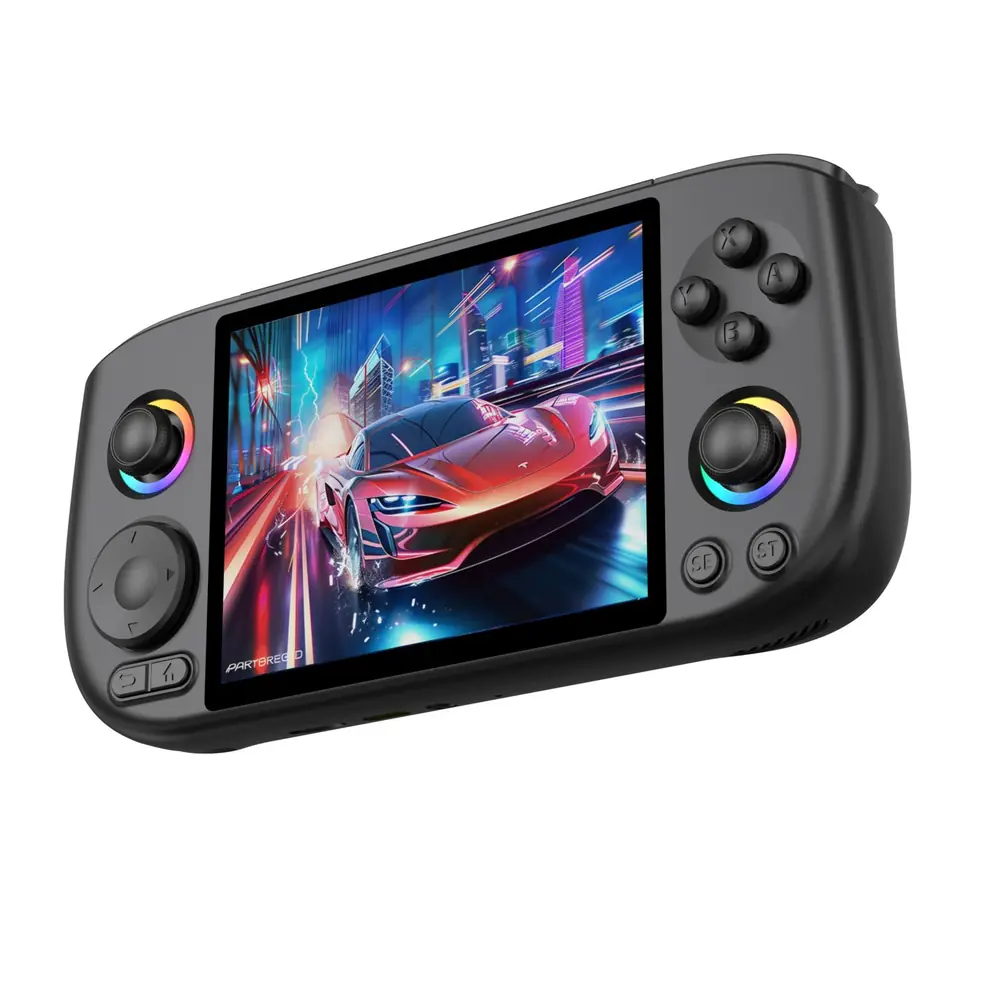
The headline software feature is Ais OS, AISLPC’s own operating system. It is built on Rocknix, a well-established open-source retro gaming OS, but carries a completely new custom interface on top.
The reasoning behind it is straightforward. Anyone who has bought a budget handheld knows the routine: unbox the device, then spend an evening sorting BIOS files, tweaking per-system settings, and working out why one emulator runs fine while another stutters. Ais OS is aimed at players who would rather skip that part and start playing.
For users who enjoy that process, AISLPC also ships a community Rocknix version, giving more experienced users a familiar base and greater flexibility for customisation and exploration.
The Applications section
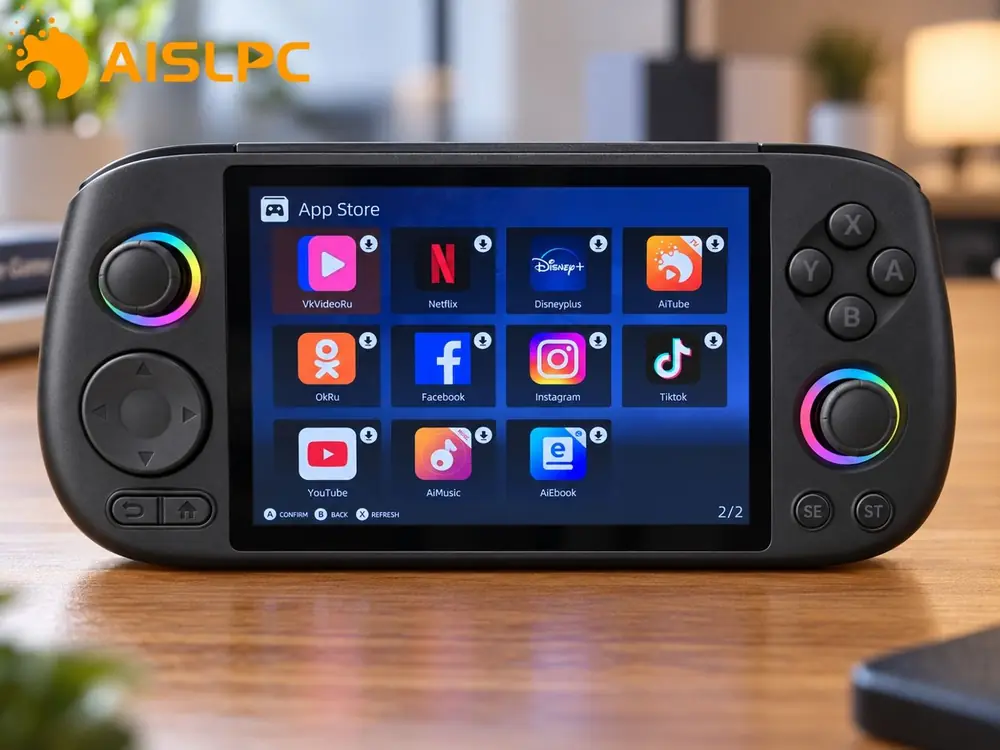
Ais OS includes an Applications section, an on-device store where users can browse and download supported applications built by third-party developers. AISLPC lists apps such as YouTube and TikTok among those available, with the store also covering streaming, social and media apps alongside utilities like a file manager.
Gaming works the same way. Rather than bundling everything into the system image, users download the relevant game application from the Applications section, then download compatible games through that application.
These features need an internet connection, which is where the Wi-Fi 6 radio earns its place. Ais OS also supports online battles.
Retro platform support
On the emulation side, Ais OS covers a broad spread of platforms: DC (Dreamcast), NAOMI, NEO GEO, MD (Mega Drive), MSX, CPS1, CPS2, CPS3, MAME, NES, GB, GBC, GBA, NDS, N64 and PSP.
AISLPC also confirms that the Pocket AIS is capable of running some PS2 titles, which is unusual territory for a handheld at this price. PS2 emulation varies heavily from title to title, so “some” is the operative word there.
AISLPC states that the Pocket AIS delivers up to 2x PSP emulation performance compared to comparable devices, and cites demanding titles such as God of War as examples of what the extra headroom allows. These performance figures are the manufacturer’s own; we have not tested a retail unit, so treat it as a claim rather than a benchmark until independent reviews appear.
Automatic 5-level cooling
The second feature AISLPC is pushing is the cooling system, and this one is genuinely less common at this price.
Rather than a fan you toggle on and off, the Pocket AIS runs automatic 5-level fan speed control. The system monitors device temperature and scales fan speed to match the workload on its own. Above 70C, the fan switches to full speed to handle the heat load during demanding sessions.
The practical benefit is that the fan stays quiet during light use, browsing menus or playing GBA and Mega Drive titles, and only ramps up when something like PSP or Dreamcast emulation actually warrants it. No menu diving, no manual profiles.
Thermal throttling is one of the main reasons budget handhelds underperform their spec sheets after twenty minutes of play, so active cooling that manages itself is a reasonable thing to build a launch around.
Display, chipset and controls
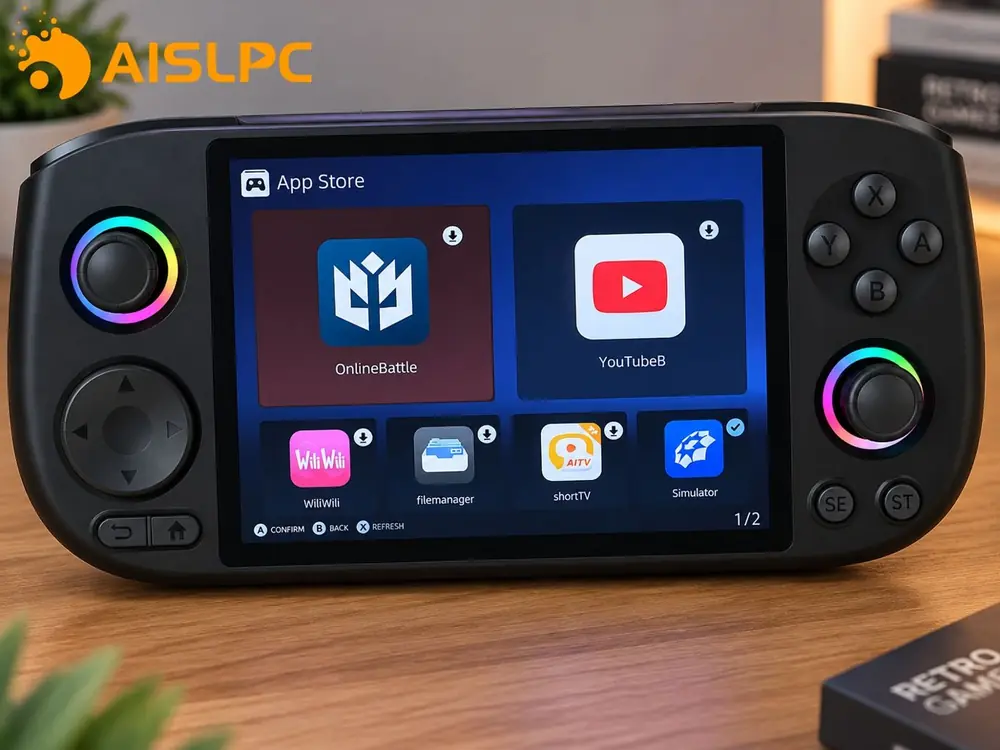
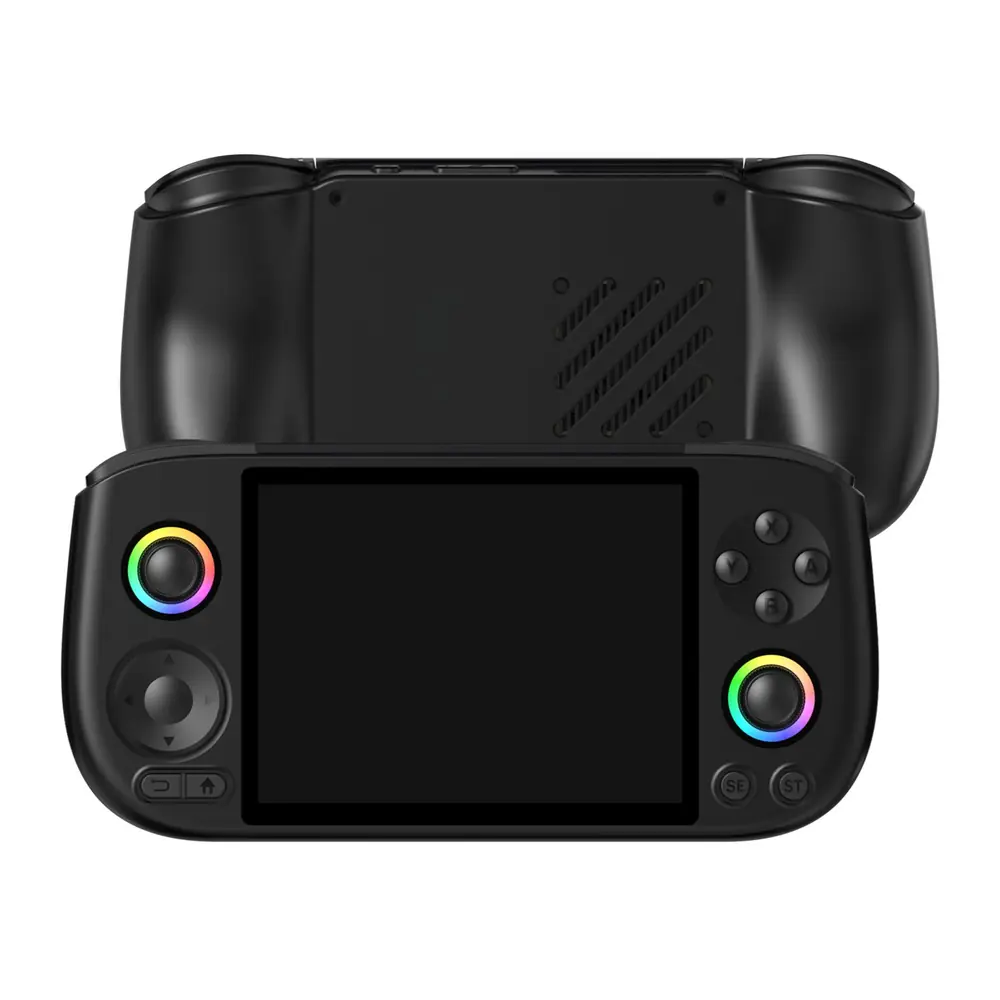
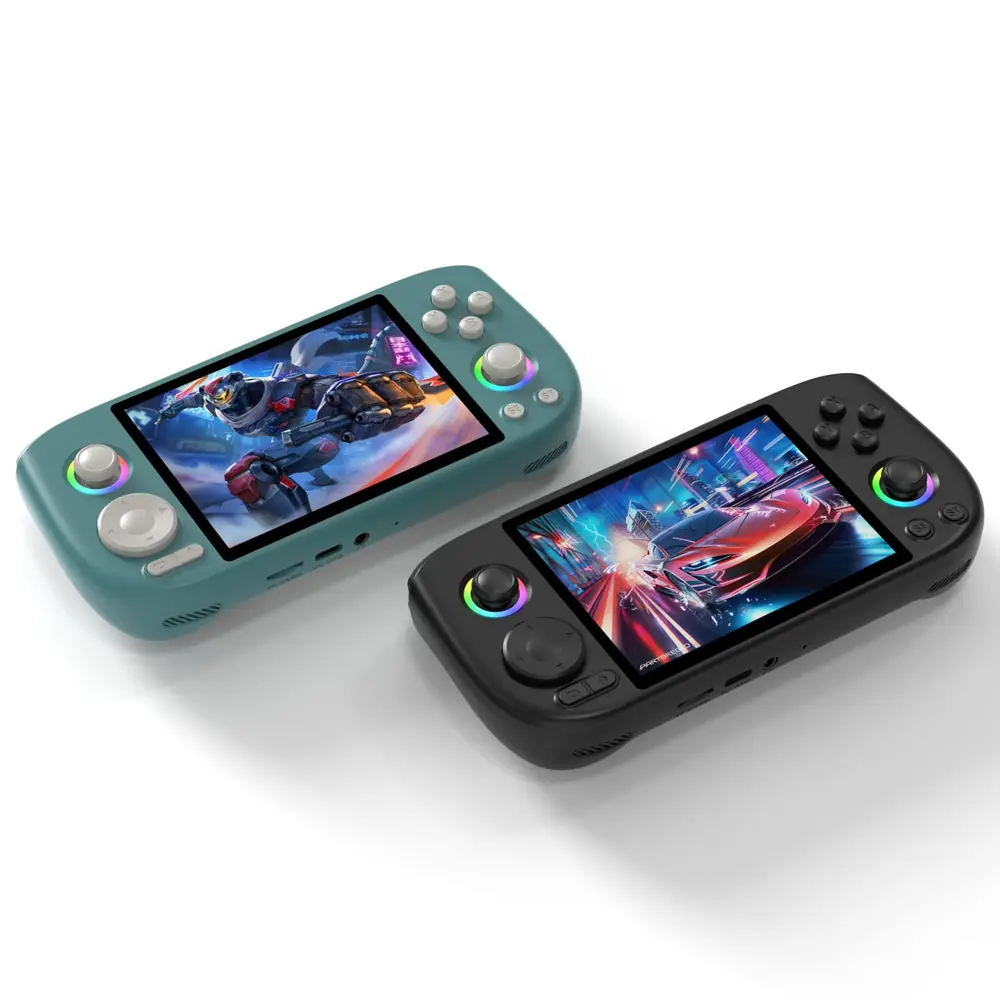
The Pocket AIS uses a 4.5-inch IPS display at 1024 x 768 in a 4:3 aspect ratio. That ratio is a deliberate choice: the overwhelming majority of pre-2000s games were made for 4:3 screens, so they fill the display natively instead of sitting between black bars, as they do on the widescreen panels most handhelds now use.
Driving it is a Rockchip RK3562 with 2GB RAM and 4GB internal storage, expandable via microSD up to 512GB.
2GB is modest on paper, but retro emulation is far less memory-hungry than modern gaming, and AISLPC says it is enough to run most ported games.
Controls are a stronger point than the price suggests. The device has dual 3D analog joysticks and Hall-effect linear triggers. Hall-effect sticks and triggers use magnetic sensors rather than physical contacts, which means they do not wear down into drift the way conventional potentiometer sticks eventually do. On a device meant to last through thousands of hours of retro gaming, that is a meaningful durability difference.
Audio, connectivity and battery
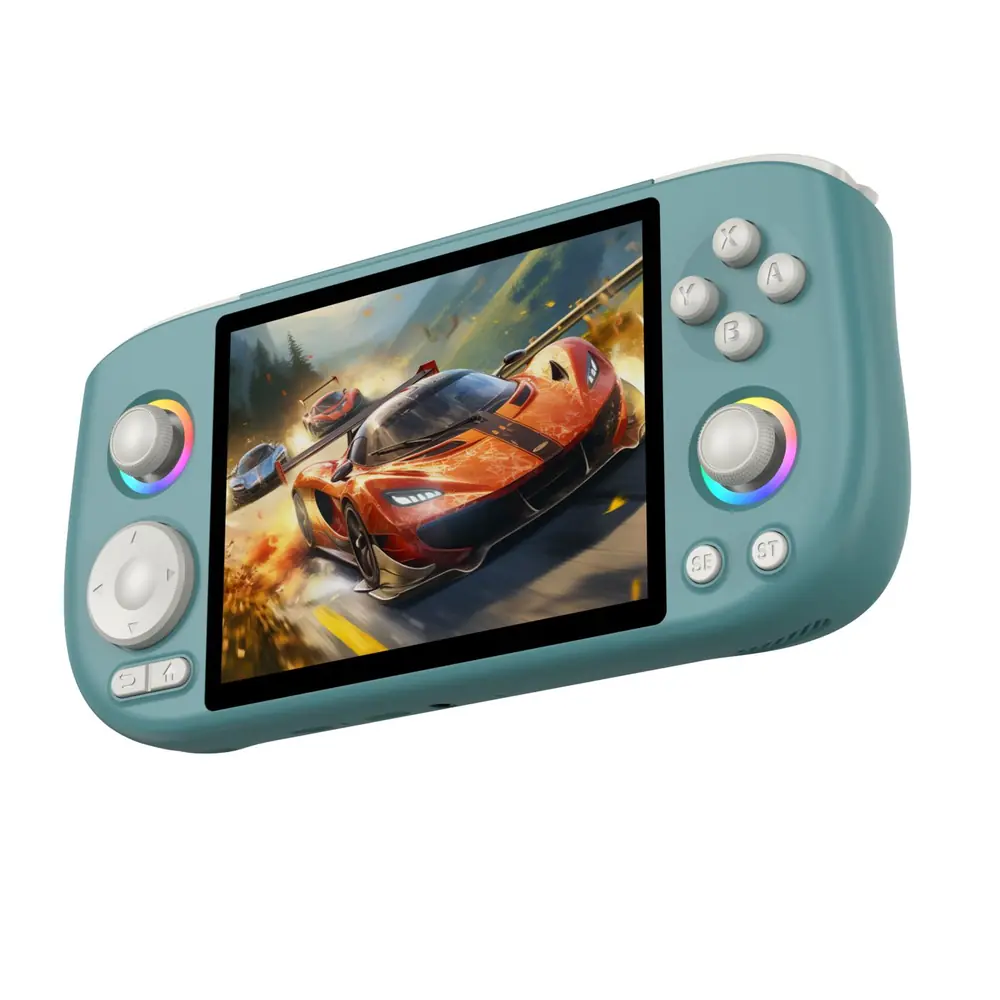
AISLPC has given the Pocket AIS an independently designed and moulded speaker system with dedicated acoustic chambers, rather than the generic drivers typically dropped into handhelds at this tier. Dual speakers are paired with a 3.5mm headphone jack for anyone who prefers their own gear.
Connectivity covers 2.4GHz and 5GHz Wi-Fi 6, supporting game streaming and online multiplayer features. There is also USB-C OTG and a vibration motor, plus RGB ambient lighting around the device.
Power comes from a 4000mAh battery. The unit measures roughly 168.3 x 82 x 20.4 mm.
Full specifications
| Specification | Detail |
|---|---|
| Operating system | Ais OS, a custom operating system built on Rocknix with a redesigned UI; community Rocknix version also available |
| Applications | On-device Applications store for third-party apps and game applications; online battles supported |
| Display | 4.5-inch IPS, 1024 x 768, 4:3 |
| Processor | Rockchip RK3562 |
| Memory | 2GB RAM |
| Storage | 4GB internal, microSD expandable to 512GB |
| Controls | Dual 3D analog joysticks, Hall-effect linear triggers |
| Cooling | Automatic 5-level fan control, full speed above 70C |
| Audio | Dual speakers with dedicated acoustic chambers, 3.5mm jack |
| Connectivity | Wi-Fi 6 (2.4GHz / 5GHz), USB-C OTG |
| Other | RGB lighting, vibration motor |
| Battery | 4000mAh |
| Dimensions | 168.3 x 82 x 20.4 mm |
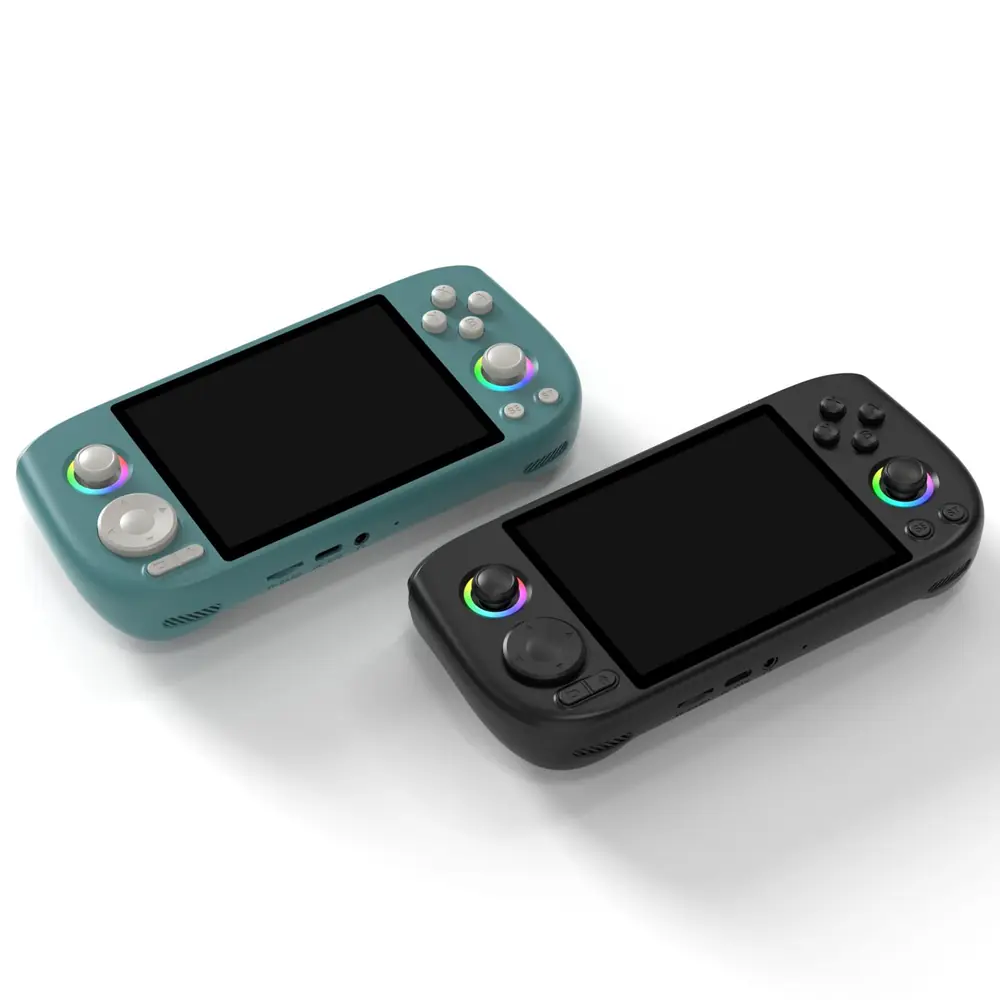
| Colours | Black / Green |
| Price | $169.99 |
Should you consider it?
At $169.99, the Pocket AIS lands in the most competitive segment of the retro handheld market, where it is up against several well-reviewed devices. What it offers that most of them do not is a cooling system that thinks for itself, Hall-effect controls that should outlast the hardware, and a software setup that tries to serve both the plug-and-play crowd and the tinkerers without forcing either into the other’s workflow.
The PSP performance claim is the thing worth watching. If independent testing bears it out, and the PS2 support proves to cover more than a handful of titles, this becomes an easy recommendation for anyone whose retro library leans heavily on the later platforms. If it does not, the Pocket AIS is still a well-specified device with a sensible display ratio and controls that do not degrade.
Full details and availability are on the AISLPC site.