If you are a serious gamer someone who grinds ranked every day, watches pro VODs, and genuinely believes competitive gaming could be your career. This article is written for you. Not for casual players. Not for people who just want tips to win more pub games. This is for the player who wants to understand exactly what it takes to reach the level where esports pays real, life-changing money.
Here is the reality, there are over 87,000 registered competitive players globally across major titles. The top 1% of earners make over $500,000 per year. Most players never get close not because they lack talent, but because they are developing the wrong skills in the wrong order. This article identifies the exact five skills that separate the players who earn from the players who grind without reward, and shows you a step-by-step path to build each one.
What Does “Top 1% of Esports Earners” Actually Mean?
Before building a plan to reach the top tier, it is important to understand what that tier looks like numerically.
| Earning Tier | Monthly Estimate (USD) | Notable Examples |
| Top 1% (“Elite”) | $50,000 – $500,000+ | Faker, N0tail, Bugha, s1mple |
| Top 5% (Tier 1 Pro) | $10,000 – $50,000 | Signed players, major rosters |
| Top 20% (Semi-Pro) | $1,000 – $10,000 | Regional leagues, minor tourneys |
| Top 50% (Amateur) | Below $1,000 | Open qualifiers, grassroots |
Johan “N0tail” Sundstein, Dota 2’s most decorated earner, has accumulated over $7.1 million in career prize money alone. Kyle “Bugha” Giersdorf won $3 million at age 16 at the Fortnite World Cup in 2019. Lee “Faker” Sang-hyeok of T1 is widely considered the highest-valued player in League of Legends history, with income streams spanning salary, equity, sponsorships, and content.
Games with the largest prize pools in 2024–2025 include Dota 2 (The International), Fortnite Championship Series, CS2 Major Championships, the League of Legends World Championship, and Valorant Champions. A player competing at the top level in any of these titles has a realistic path to entering the top 1% if they have the right foundation.
RELATED POST- Top 10 Esports Games in India for Casual Players Who Want to Go Competitive
Skill 1: Mechanical Skill
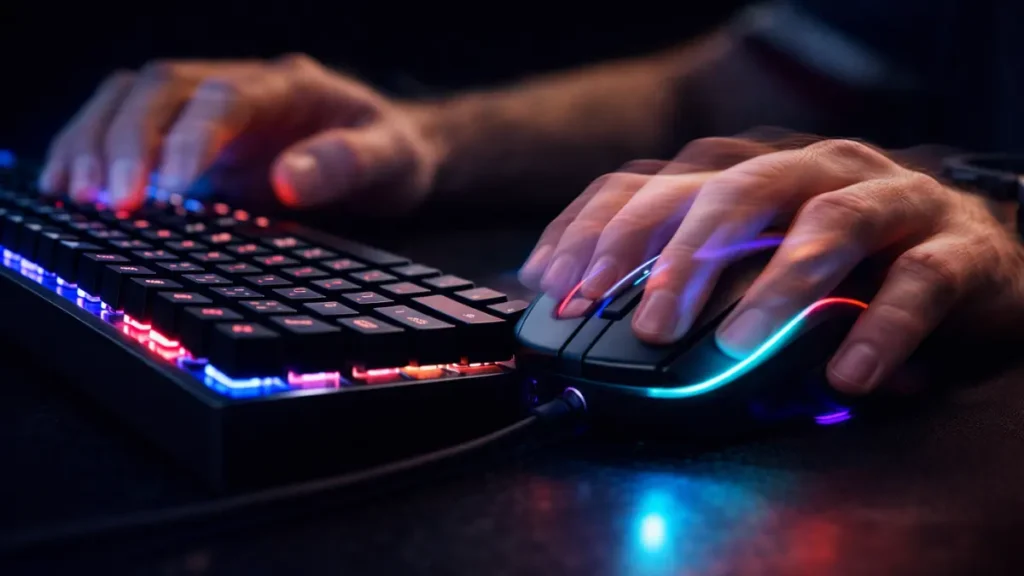
Mechanical skill is the most fundamental skill in esports. Reaction time, aim precision, movement fluidity, combo execution, and input consistency all depend on the Mechanical skill. Without Mechanical skill, you can’t pursue a career in esports.
Faker has built his legendary career on a combination of elite mechanical execution and deep, match-defining game knowledge. That pairing is what defines the upper tier of every title. Mechanics alone, however, are not sufficient. They function as an entry ticket into serious competition, not a guarantee of success.
RELATED POST- How to Unlock Hardy Boyz in WWE 2K26 (Season 4 Complete Guide)
How to Build Mechanical SKill
To build mechanical skill, players must consistently and purposefully practice their game’s specific mechanical skills. Each game has different requirements, so it’s important to train accordingly. For example, aim practice in FPS games, recoil control and gyroscope sensitivity in BGMI, hip-fire accuracy and timing in Free Fire, and last-hitting and combo skills in MOBA games.
Players should track their performance with stats or tools to see how their skills are improving. Additionally, watching replays of top players’ gameplay and learning their techniques can also help achieve mechanical mastery.
RELATED POST- How to Increase Popularity in BGMI – Best Tips of 2026
Skill 2: Game Sense
Game sense refers to the ability to understand the game and make appropriate decisions based on the situation. This allows players to anticipate enemy movements before they encounter them, such as where they might be approaching or hiding.
The player also needs to understand the difference between micro and macro decisions. Micro decisions are small, immediate decisions, such as taking cover at the right time, using the right gun, or throwing a grenade. Macro decisions are larger-scale decisions, such as where to move on the map, which areas to capture, or when to avoid a fight.
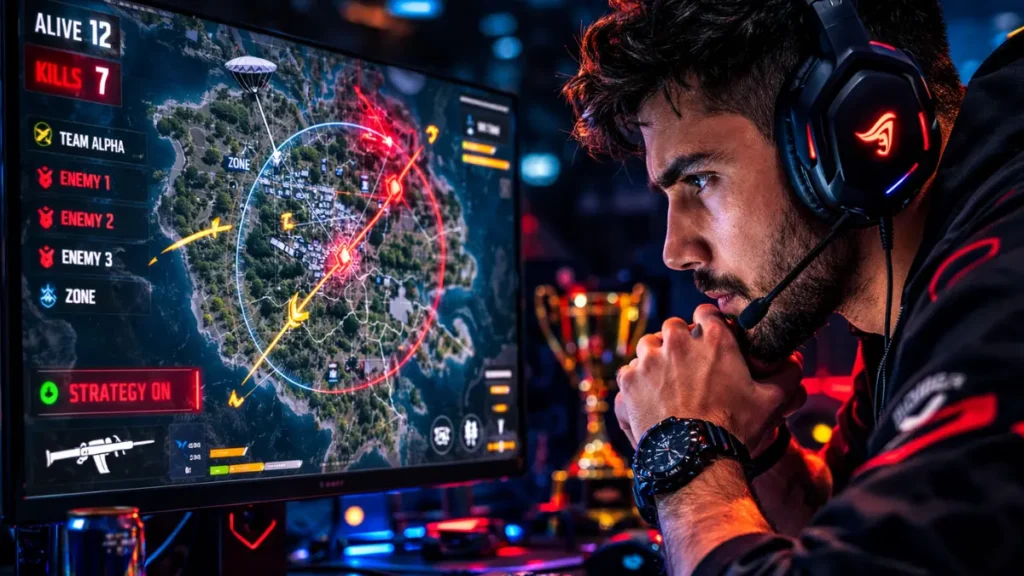
For example, in BGMI gameplay, if you see that the enemy team is in a strong position and you don’t have cover or the right gear, then fighting at that time is not the right decision. A player with good game sense understands when to fight and when not to fight.
Securing a safe position when changing zones, observing enemy movements to understand their strategy, and then attacking at the right time. Thus, making the right decisions in a short time and anticipating the enemy’s moves are the hallmarks of strong game sense.
The following framework represents the progression stages of game sense development:
| Level | What It Looks Like |
| Level 1 – Reactive | Responds to what has already happened; always one step behind. |
| Level 2 – Aware | Tracks the minimap consistently; monitors positioning of teammates. |
| Level 3 – Predictive | Understands where enemies will rotate before they do. |
| Level 4- Controlling | Sets the tempo of the match; forces opponents to react to their decisions. |
| Level 5 (Top 1%) | Reads the entire game as a chess match; controls both macro and micro simultaneously. |
How to Develop Game Sense
To improve your game sense, understanding the meta is crucial. This means knowing which strategies, team combinations, or rotations are most effective in the current update or patch, and why. It’s also beneficial to play different roles or positions initially.
When players understand the responsibilities and strategies of each role, it becomes easier for them to read the opposing team’s moves and the game situation. Thus, through consistent practice, analysis, and understanding of strategy, a strong game sense is gradually developed.
RELATED POST- Top 10 Best eSports Teams in the World Right Now (2026 Rankings)
Skill 3: Teamwork and Communication
Solo queue skill and professional team play are genuinely different disciplines. Many players who are mechanically elite and have strong individual game sense find themselves unable to perform in structured team environments because their communication and coordination skills are underdeveloped.
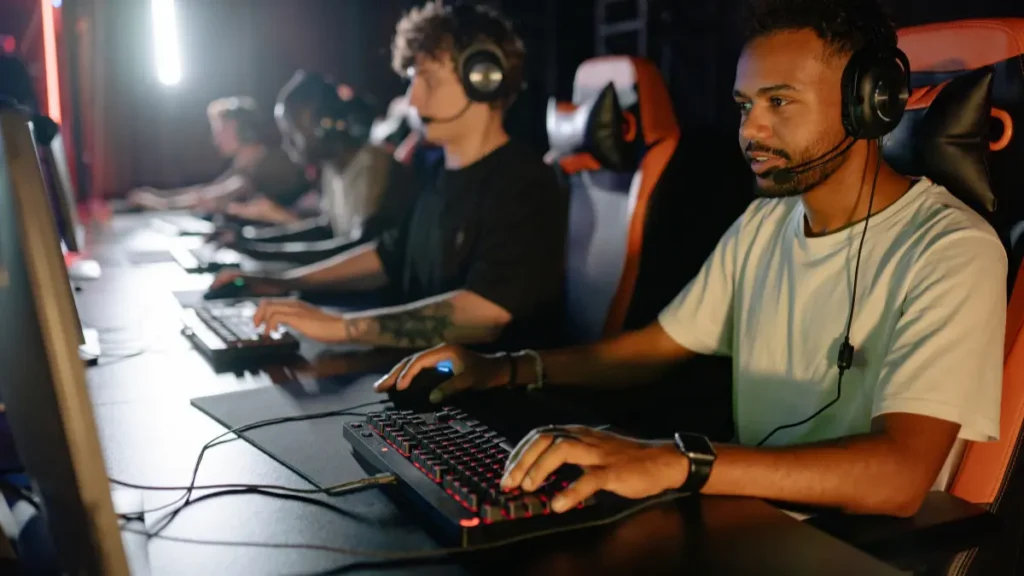
Professional esports organizations prioritize team-functional players. A team with average mechanical skill and elite communication will consistently outperform a team with elite mechanics and poor communication over a best-of-five series. The complexity compounds over time, and coordinated teams exploit it more effectively.
What Professional Communication Looks Like
- Callout systems: standardized language used across the team for locations, abilities, and enemy positions. Every player uses the same terminology.
- Information discipline: communicating only what is actionable. Reducing noise in team voice communications during live play.
- No-blame debriefs: structured post-match reviews that analyze decisions, not attribute fault to individuals.
- Pre-game role clarity: every player knows their win condition, their priority target, and their fallback options before a match begins.
RELATED POST- Top 10 Free Fire Youtubers in the World 2026
A Real-World Example of Team Synergy Winning
At The International 10 tournament in 2021, Team Spirit was initially considered a weak team and ranked below the favorites. They lacked major star players, but they excelled thanks to their excellent team coordination, clear communication, and unique strategies.
Team Spirit defeated several strong and top-seeded teams not just with superior mechanics, but also with disciplined teamwork and coordination. This example demonstrates that good team communication in esports provides a significant advantage, sometimes even more powerful than individual skill.
Even the most mechanically gifted player in a roster gets benched if they cannot function within a team system. Organizations evaluate cultural fit and communication quality alongside raw skill metrics.
RELATED POST- Most Influential Esports Players of BGMI in 2026
Skill 4: The Mental Game
Mental skill is one of the most underrated skills in competitive esports, yet professional players often cite it as the biggest factor in winning or losing big matches. This means that gaming skills and mechanics alone are not enough; a player’s composure and mental strength are also crucial.
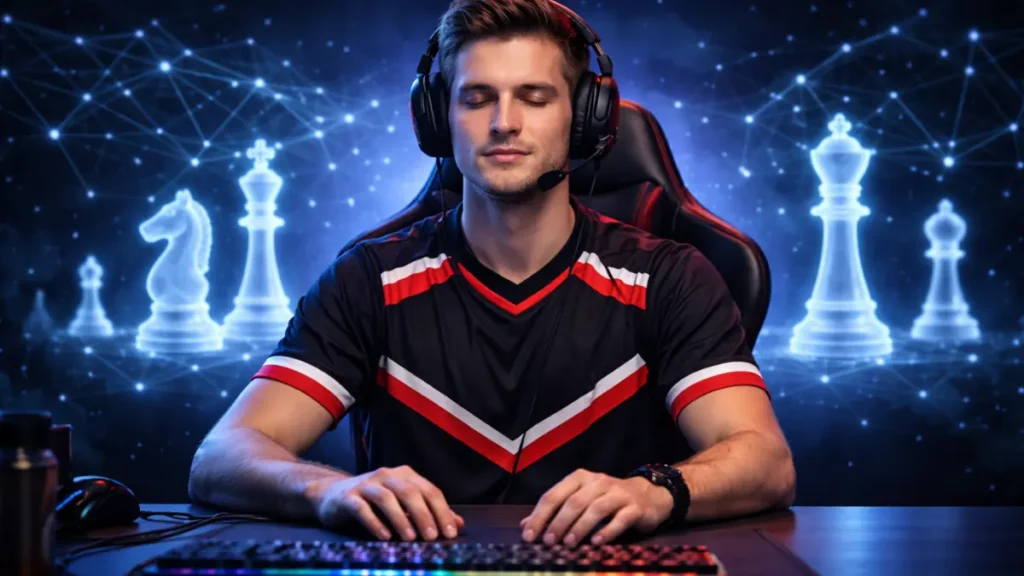
Players who can handle pressure, recover quickly from defeat or difficult situations, make informed decisions under stress, and maintain focus during long tournaments are the ones who win repeatedly. However, players who lack this mental strength often fail to reach the top elite level, despite their good performance.
Mental Techniques Used by Professional Players
| Technique | How It Works | When to Apply |
| Box Breathing | Inhale 4 counts, hold 4, exhale 4, pause 4. Regulates heart rate. | Before matches, after tilt moments. |
| Visualization | Mentally rehearse optimal plays and decision sequences. | In the 30 minutes before competition begins. |
| Mindfulness Between Rounds | Brief attentional reset between in-game rounds or respawn cycles. | During natural pauses in gameplay. |
| Tilt Journaling | Written log of tilt triggers and response patterns. | Post-session review, weekly analysis. |
| Process Focus | Shift attention from outcome (win/loss) to process (decision quality). | Ongoing, during all practice sessions. |
Research in gaming psychology shows that many players’ progress is hampered by poor practice habits, often influenced by their emotional state. For example, consistently playing ranked matches while angry or frustrated (a tilted mental state), avoiding VODs or replay reviews to avoid seeing their mistakes, or avoiding playing with a team because playing alone feels safer. All of these things can stunt a player’s development.
Players who reach the top 1% view mental performance as a skill that can be learned and trained. Therefore, they take it seriously and systematically work to improve it. Many professional players and teams also work with sports psychologists or mental performance coaches to maintain their mental performance.
RELATED POST- How Does the BGMI Anti-Cheat System Work? Everything You Need to Know
Skill 5: Personal Branding and Content Creation
The fifth skill is the one that determines whether a top player earns $80,000 a year or $800,000 a year. Personal branding and content creation have become inseparable from top-tier esports income. Platforms such as Twitch and YouTube allow players to connect directly with audiences and generate revenue through subscriptions, donations, advertisements, and sponsorship integrations independent of competitive results.
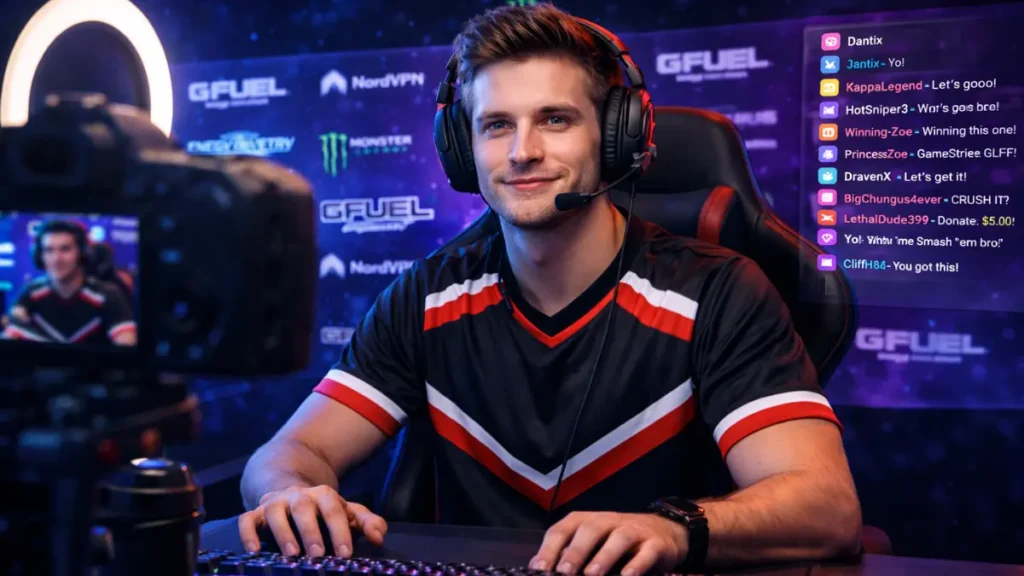
Faker’s income from brand deals, merchandise, co-ownership of T1, and content creation almost certainly exceeds his tournament prize money. This is the structure of elite esports earnings in 2025. The top earners are not just players. They are brands.
Why Branding Has Become Non-Optional for Top Earners
- Sponsorship deals at the highest level now frequently include equity positions, multi-year agreements, and performance clauses tied to audience metrics, not just competitive results.
- Streaming income provides consistent monthly revenue that prize money cannot match in regularity. A player with 10,000 average concurrent Twitch viewers generates meaningful income regardless of whether their team wins the next tournament.
- Personal brand strength directly affects the value of a player’s next contract negotiation. Organizations pay more for players who bring audience reach alongside skill.
- Content creation extends a competitive career beyond its playing years. Many of the highest-earning figures in esports today transitioned from active competition to content as their primary income stream.
Esports Pro vs. Streamer: Which Path Earns More in 2026?
This is one of the most frequently debated questions among players developing their careers, and the honest answer is that neither path is universally superior. The right choice depends on the individual’s skill profile, personality, and long-term goals.
| Dimension | Competitive Pro | Streamer / Content Creator |
| Primary Income Source | Salary + prize money | Subscriptions, ads, donations, sponsorships |
| Income Consistency | Variable; dependent on results | More stable once audience is established |
| Earning Ceiling | Very high (TI, FNCS prize pools) | Extremely high (top streamers earn millions annually) |
| Skill Required | Elite mechanical and team skill | Game skill + personality + content consistency |
| Entry Barrier | Very high and narrow | Lower barrier, but heavily saturated market |
| Career Longevity | Typically shorter active window | Potentially decades with audience retention |
The practical guidance for a developing player is as follows. If you are consistently placing in the top 0.1% of ranked players in your title and your skills are demonstrably elite, the competitive route offers the clearest path to prize money and organizational salary.
If you are in the top 5% mechanically but score highly on communication ability, personality, and content creation interest, the streaming route may generate substantial income faster and with greater long-term stability.
Most elite earners in 2025 pursue both paths in parallel. Competitive performance builds credibility and audience interest. Content creation monetizes that audience and extends income beyond what prize money alone can provide.
RELATED POST- Is BGMI Lite Finally Coming to India? Everything We Know
Daily Practice Habits of Top 1% Esports Earners
The structure of a professional player’s training day is meaningfully different from an enthusiastic amateur’s session. The difference is not primarily hours, though elite players in bootcamp environments frequently practice eight to twelve hours per day.
The difference is intentionality. Every block of a professional’s practice day has a defined purpose.
| Session Block | Duration | Focus |
| Morning Warmup | 30 – 45 min | Mechanical drills: aim training, movement, reaction calibration. |
| Ranked / Competitive Play | 3 – 5 hours | Focused practice with deliberate objectives per session, not casual grinding. |
| Team Scrimmages | 2 – 4 hours | Structured practice against organized opposition. |
| VOD Review | 1 – 2 hours | Individual and team replay analysis with coaching staff. |
| Mental Debrief + Journaling | 20 – 30 min | Written reflection on performance, tilt events, and decision quality. |
| Sleep | 8 hours (minimum) | Non-negotiable for cognitive function and reaction time maintenance. |
The critical insight is that most amateur players accumulate hours in the first two blocks without investing meaningfully in the latter three. VOD review, team practice, and structured mental reflection are what convert raw game time into genuine competitive development.
Without them, additional hours in ranked play primarily reinforce existing habits rather than building new capabilities.
Conclusion
The five skills covered in this article mechanical mastery, game sense, teamwork and communication, the mental game, and personal branding are not independent variables. They compound on each other.
Mechanical skill gives you the foundation to compete. Game sense gives you the edge to win. Communication gives you the ability to function in a professional team. Mental resilience gives you the consistency to sustain elite performance over a tournament run, a season, and a career. Personal branding turns competitive success into lasting financial reward.
Frequently Asked Questions
Top 1% earners typically generate $500,000 or more annually when combining base salary, prize money, and endorsement income.
Dota 2, Fortnite, CS2, League of Legends, and Valorant consistently produce the highest individual earners, driven by large organized prize pools and strong viewership numbers that attract major sponsorships.
Yes, though it is increasingly rare. Prize money and team salary alone can place a player in the top 1% of earners.